by Whitney Youngs
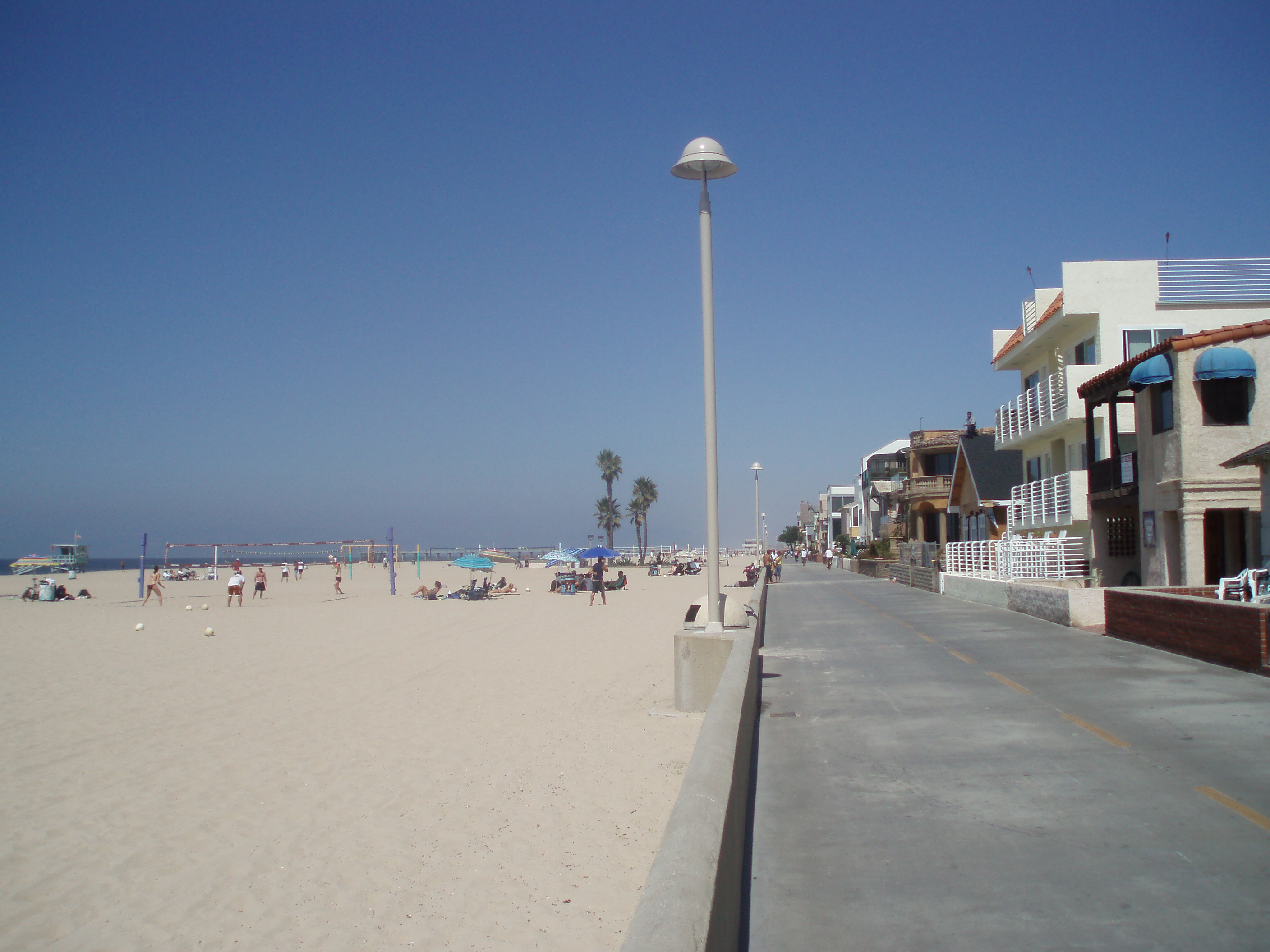
In Hermosa Beach, walkers, joggers, baby carriages, skaters, bicyclists and skateboarders all share space on The Strand, a long and flat stretch of concrete next to the beach.
In past years, the convergence has proven extremely dangerous. Numerous accidents and near accidents have been reported involving both pedestrians, bikers and skaters. Although the city has installed red flashing lights that direct both visitors and residents to walk their bikes near the pier on crowded days, enforcement of the law, and other laws pertaining to unsafe riding and speeding has been difficult for Hermosa Beach Police officers to enforce.
Some people contend that this lack of enforcement coupled with an increase in safety should be considered when Hermosa Beach city officials ultimately decide whether or not to build a separate bike path parallel to The Strand.
Enforcement, or the lack thereof
Under the city’s current municipal codes, police officers may issue citations to people who violate the designated walk zone on The Strand from 10th Street to 15th Street. Red flashing lights in this area alert people to the zone.
Police citation records for the past year show that the department issued one citation for the violation of this law.
According to Traffic Sgt. Tom Thompson, the department has never issued what one might consider a great many of these citations, although he did say that last year was probably lower than previous years. The city created the walk zone by the pier in 1993.
“I know that we have issued a few tickets in past years,” said Thompson. “I’m not sure about this past year, but maybe it’s because we haven’t had a problem or if we haven’t been around to enforce the law. We have walked around in this area and once we make people aware that the area is a walk zone, then people get off their bikes and walk them.”
Hermosa Beach Police officers also attempt to enforce speeding and unsafe riding laws on other stretches of The Strand. According to city codes, bikers and skateboarders are required to yield to pedestrians, follow a speed limit and refrain from what the code defines as “trick riding.”
“Trick riding is unlawful for any person riding or operating any wheeled vehicle or device,” states the code. “It shall (also) be deemed reckless and dangerous if any person rides or operates any wheeled vehicle or device permitted on The Strand walkway, including bicycles, skateboards and roller skates, in excess of 10 mph.”
Thompson said that while the department does not have exact figures on how many speeding or “trick riding” tickets his officers have issued on The Strand, he estimates that officers issue 100 citations in that area per year. However, because records don’t show what these tickets were for, it is impossible to assess whether such tickets were for other infractions such as open container violations or using fireworks.
“Trick riding, along with unsafe riding such as speeding, can be cited at the officer’s discretion, and they can issue these tickets anywhere in the city,” said Hermosa Beach Chief of Police Mike Lavin. “Regardless of how these codes are enforced, in my opinion, promoting the building of a separate bike path should be based on how The Strand is used. The Strand is a high use for people riding, skateboarding and running; and so it would make sense to promote the construction of a bike path based on this heavy use.”
Like many joggers and walkers who use The Strand on weekday mornings, Manhattan Beach resident Marilyn Anderson believed this particular time of day would lessen the chances of being involved in an accident. She was wrong.
In July of 1998, a biker riding along The Strand in Hermosa Beach hit Anderson at 15 mph from behind. Anderson suffered a subdural hematoma and spent three weeks in the hospital.
Anderson said the biker hit her while she jogged along The Strand adjacent to the northern section of Noble Park. Anderson’s doctors told her she was very fortunate because all of her physical and mental capabilities remained intact.
“I was pretty darn lucky,” she said. “I feel very strongly about the issue because I was someone who survived this accident, but the city has babies, children and the elderly who also use The Strand and may have not been so lucky.
“I was out using The Strand and there were very few people on it when I was hit by someone who just wasn’t paying attention.”
According to Lavin, the flashing red lights are turned on by an automatic timer on Saturday and Sunday, but the lights can also be turned on manually on an as-needed basis during weekdays.
“We have an 80-percent to 90-percent compliance, although some would disagree with that,” said Lavin. “We generally don’t monitor this area all the time in our normal patrol because it is a misuse of manpower for an officer to stand out there and watch for an infraction to take place.”
With the help of Thompson, the department will receive a $72,000 grant that will be used for a traffic enforcement and education program, focusing on pedestrian and bicycle safety along with DUI enforcement. The 15-month program, beginning in October, is sponsored by the Federal Bureau of Investigation.
“We have had accidents on The Strand from bicyclists coming onto it from a side streets or with bicyclists trying to pass walkers or joggers by using the wrong side of the road,” said Thompson. “I think the bike path is a good idea from a safety standpoint. The bike path still adheres to a 10-mph limit so people aren’t able to ride 24 mph and so we would still need to enforce this law.”
A new path?
In recent months, a California Appellate Court upheld a superior court decision favoring the city of Hermosa Beach in its interpretation of an 80-year-old deed that gives the municipality legal authority to construct a separate bike path on the beach. This issue first became a topic of debate in 1995, when Hermosa Beach city officials sought a court judgment on the deed drafted in 1907 that would relieve the city of any restrictions in building a bike path on the beach.
“I understand that people want a separate bike path, but this path will cut into the city’s beach and I don’t know if I want that to happen,” said longtime Hermosa Beach resident and frequent Strand user Frank Donaldson. “I use The Strand all the time and I don’t think our beach can afford another slab on concrete on it. I’m all for building it along Hermosa Avenue.”
The idea of constructing a bike path surfaced in response to safety concerns. Some Hermosa Beach council members have thought of placing the issue on the ballot and allowing Hermosa Beach voters to decide the fate of a separate bike path.
“I think the city should put the issue on the ballot. I think the truth on the matter will come to light and I think people will be convinced,” added Anderson. “A separate bike path should be built if nothing at all but for the welfare of the general public.”

