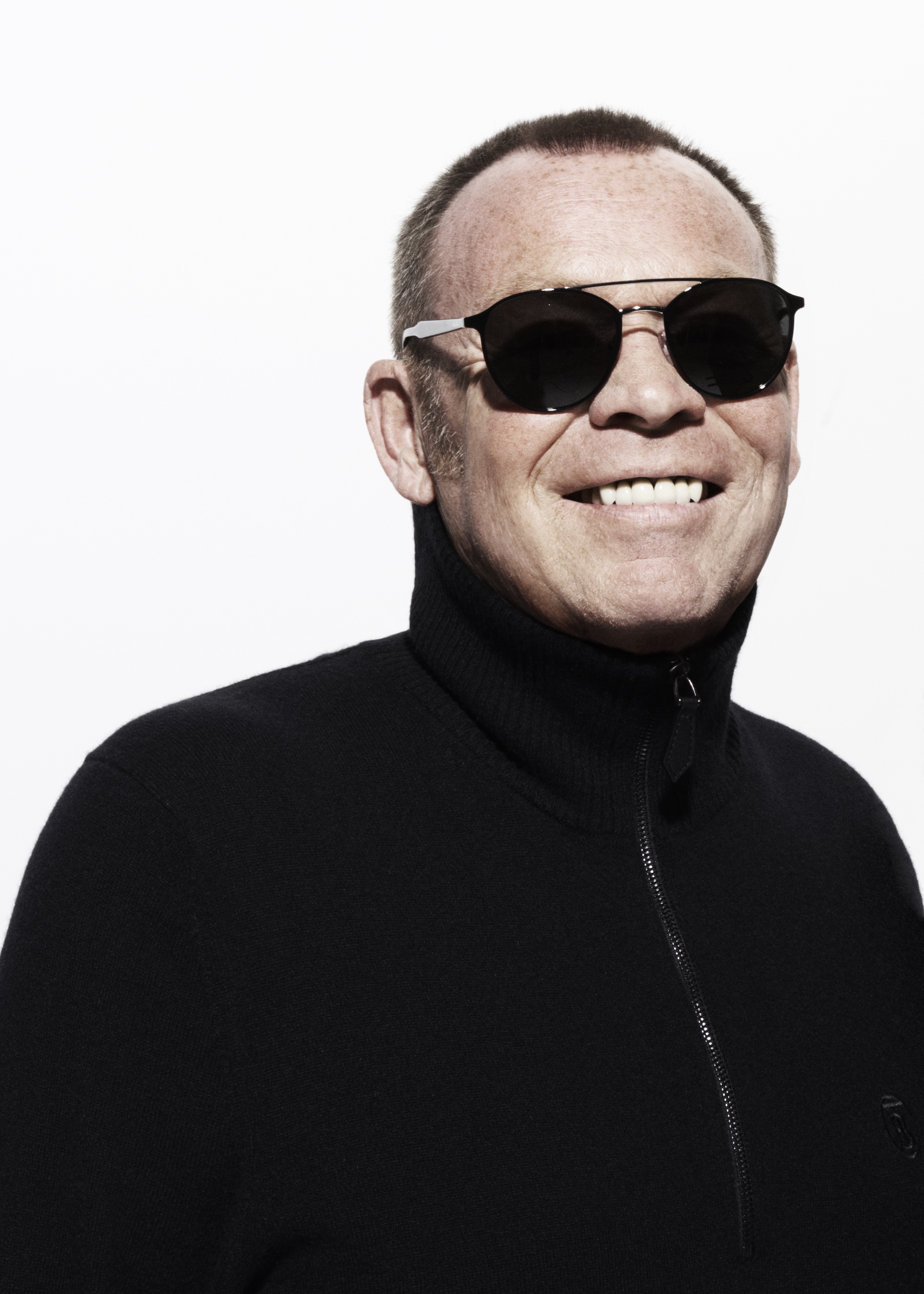
In the summer of 1978, a group of lads born into working-class families from Birmingham, England, congregated in a basement to rehearse some songs. This auspicious rendezvous marked the early beginnings of the band UB40.
Initially labeled a jazz-dub-reggae group, UB40 comprised six founding members: Norman Hassan, a childhood friend of the Campbell brothers, Robin and Ali—the latter who attended Moseley School of Art, where he met Earl Falconer, Brian Travers and James Brown.
“You’ve got to remember that when I took reggae up, it was only in its infancy,” said Ali in a BBC interview. “…Reggae had only come around in ’68. So it was only 11 years old. Before that it was rocksteady and before that it was ska. So we chose a very young music genre. In fact, the youngest there was. And that’s probably why we’re still cool today. Because reggae hasn’t outlived its own cool like jazz has.”
The band’s sound began to evolve after Robin left then rejoined and with the recruitment of Michael Virtue and Terence Wilson, aka Astro, who’d honed his musical chops with Duke Alloy Sound System. UB40, the name of an unemployment benefit form, advocated left-wing political principles and philosophies popular among young adults at the time.
“I feel we’ve gone backwards in England,” said Ali. “For UB40, the Rainbow Nation thing that we were all looking forward to didn’t happen because hip-hop came along, and along with it came racism and area-code gang warfare stuff and all that. A sort of self-imposed segregation happened, in my eyes. I think we’re only just coming out of that now. What’s good with reggae is they’ve dropped the gangster thing. There’s a movement in Jamaica now with bands like Raging Fyah and artists like Protoje and Chronixx, to move back to conscious lyrics and roots rock reggae. Which we’re very happy about.”
In the spring of 1980, when the Pretenders invited UB40 to tour, its debut single, “King b/w Food for Thought” hovered near the top of the charts in the United Kingdom. The following autumn, UB40 released its debut album, Signing Off on Graduate Records. The recording, a series of 13 songs so divergent from the English 2Tone and punk bands ubiquitous in the 1980s, soared to no. 2 in the U.K. and remained on the charts for 72 weeks.
UB40 eventually signed with Virgin Records and opened the recording studio, The Abattoir, in Birmingham. Beginning in 1983, UB40 paid homage to the pioneers of reggae and the genre’s signature sounds with its series of Labor of Love recordings. These albums also exposed American audiences to songs like Jimmy Cliff’s “Many Rivers to Cross” and Neil Diamond’s “Red Red Wine.” (UB40 only knew Tony Tribe’s version of “Red Red Wine” and learned only later that Diamond had written the song.)
“All contemporary music is influenced by reggae beats,” said Ali. “Justin Bieber, Ariana Grande, Rihanna, Beyoncé, Pharrell Williams—they’re all making reggaefied tracks.”
In 2021, UB40 lost one of its founding members, Brian Travers, who died of cancer, while Matt Doyle, a member of the Birmingham-based reggae band, KIOKO, joined the group as its new lead singer. At BeachLife, crowds can expect to hear some of the group’s Labor of Love covers.
“We’re not self-indulgent,” said Ali. “We wouldn’t go out and play stuff people didn’t know. So you just get a 90-minute set of all our hits, young and old and fresh and stale.”
 The Lazy Sway