POPULAR AMERICAN COMPOSER AARON COPELAND ONCE SAID THAT THERE WAS definitely meaning in music, but that he did not know the words to describe it. Those astute remarks best describe the feelings among some of the most passionate and devout music enthusiasts in the world: opera fans.
They travel the globe visiting opera houses in the Americas, Europe and Russia to watch productions that are centuries old—which they’ve seen many times before. They will spend $200 on orchestra seats and anywhere from $1,000 to $10,000 on trips just so they can follow the touring schedules of their favorite singers. These are opera’s most dedicated fans, they are its groupies.
When one thinks “groupie,” images of young girls in tight jeans and see-through tank tops come to mind; they wait backstage and hope to catch a glimpse of their favorite rock star. The stereotype exists just like the stereotype of an opera fan, usually characterized as a conservative, wealthy and elderly woman in a fur coat. Times are however changing and so are the demographics of opera fans.
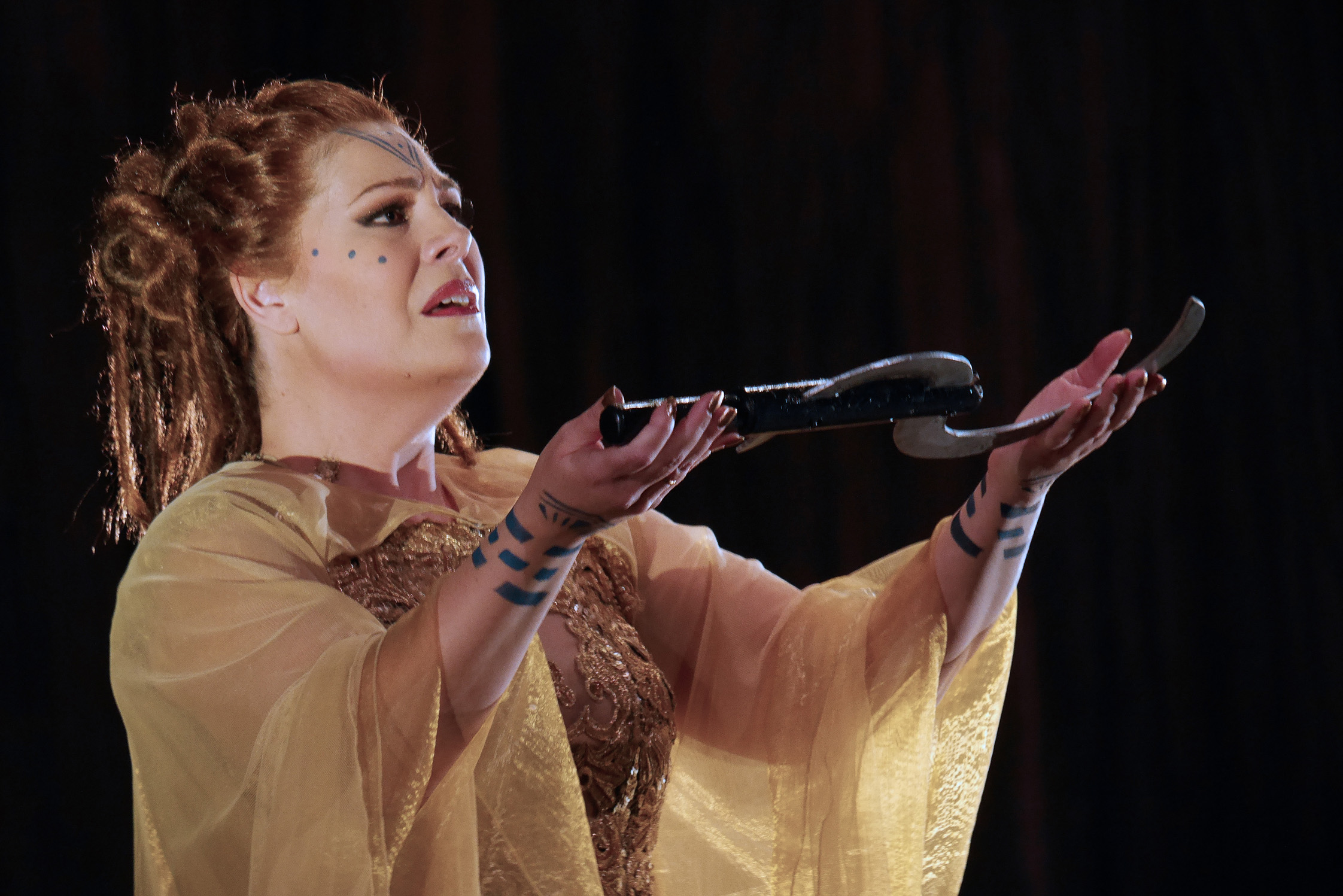
“Fans of opera love it more than anything,” states famed soprano Sondra Radvanovsky, currently singing the role of Queen Elizabeth in “Don Carlo,” showing at the San Diego Opera. “They have such a passion for it and it’s almost as if, if they don’t get their fix they’ll go crazy. I think there is an intense connection between the fans and the singers because in opera we are playing these very dramatic roles. We are characters who are tragic, die or are in love, so I think it really strikes a chord in people.”
Robert Wilder Blue, the founder of the online magazine USOperaWeb dedicated to American opera, first fell in love with opera at age 11.“I don’t think there is a typical opera fan but rather a few different types,” Blue explains. “There is the stereotypical ‘elite’ patron. These are the folks who tend to support the opera financially and whose tastes are often more conservative. Then there are the die-hard fans (some would call them fanatics) who know opera inside and out and have well formed opinions about performances and artists.”
According to the National Endowment of the Arts, the median age of operagoers in 1992 was 45 and in 2002 it rose to 48. Attendance among college graduates has risen from about 23 percent in 1992 to 35 percent in 2002, while attendance among college students has risen from an estimated 21 percent in 1992 to roughly 24 percent in 2002. The most significant rise in attendance occurred in the 45- to 54-yearold age range, with attendance increasing from about 19 percent to approximately 24 percent in 2002.
San Francisco resident Ruth Jacobs, a board member of the Northern California chapter of the Wagner Society and an “opera hopper,” has traveled repeatedly to cities such as Moscow, Frankfurt, Munich, Vienna, Rome, Milan, Budapest and Berlin to see her favorite productions — the most remote location was Savonlinna in Finland. But, Jacobs is no stranger to cities in the U.S. and has traveled to New York City 10 times to catch a glimpse of a favorite star.
“Opera fans, we are a pretty emotional and opinionated bunch, but also quite knowledgeable,” says Jacobs, who writes for the Wagner Society’s publication Leitmotive. “Because of the cost involved, opera fans are generally mostly upper middle class, although there are many students and people who do not have much money who go standing room.”
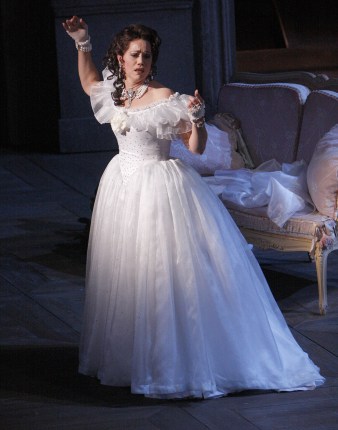
Shawnet Sweets, a ticket treasurer for the Los Angeles Opera, is not what one would consider the typical opera supporter. She is young, earns a moderate income and she adores soprano Elizabeth Futral, who she’s seen about 17 times.
“She has a voice like no other voice I’ve ever heard,” explains Sweets. “It’s very moving. You really believe that she’s feeling what she’s singing.”
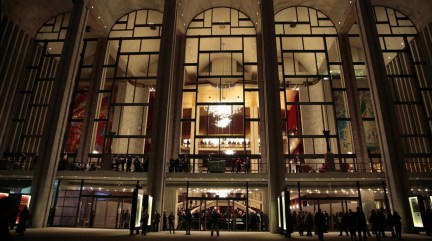
Sweets flew to New York this past November to see Futral in “La Juive” at the Metropolitan Opera. She has traveled to opera houses in Santa Fe, Houston, Dallas, New York City, San Diego and San Francisco and is currently saving for a trip to Italy. Sweets was first exposed to opera as a child thanks to her grandmother. As a kid she and her grandmother dreamed of seeing a performance at the Met together, but her grandmother died in 1977.
“When I went to the Met for the first time, which was about four years ago, I took a picture of her with me because she didn’t get to go with me but I knew she was there in spirit,” she recalls.
Composer Richard Wagner’s Ring seems to garner the attention of a lot of Opera fanatics. Many fans call themselves “Ringheads” after his four-opera cycle (about 16 hours of music) “Der Ring des Nibelungen.” Wagner fans who treasure more than just the Ring are dubbed Wagnerites.
M.A. Barnes, a self-proclaimed “Ringhead” and Wagnerite, is a traveling opera columnist for a newspaper in Athens, Georgia, and asserts opera fans are a very diverse group, with just one thing in common: a zeal for the music.
“We are grey-headed old husks and we are young twenty-somethings,” Barnes says. “We are rich, poor and students. Some dress in Balenciaga gowns and some wear jeans. All are very passionate about opera—learning about it, understanding it, feeling it. Opera takes concentration, to go inside oneself and feel the tremendous emotions the composer felt. Opera is the monarch of all arts because it is all the arts in one: a symphony, a play, a musical, art, ballet, poetry.”

Mark Burstein, another well-versed opera hopper has visited London, Paris, Lyon, Zurich, Prague, Milan, Florence, Bayreuth, New York, Philadelphia, Chicago and Los Angeles. On his 42nd birthday, Burstein snagged third-row center orchestra seats at Teatro alla Scala, which according to Burstein, is the holy grail of Italian opera. “From Wagner obsessives (I know a gentleman who is on his 76th Ring) to dilettantes, opera speaks to different people in different ways,” says Burstein, who has had the good fortune to befriend one of his favorite opera divas Anna Netrebko through mutual friends and performances.
Not all fans are as lucky as Burstein. For most, the closest an opera hopper will come to knowing an opera singer is by occupying the velvet seats, where they will continue to search for the meaning in the music.
 The Lazy Sway