By early next month, residents and visitors in Hermosa Beach will be able to access the Internet for free in one particular part of town as city officials this week announced that the first phase of its wireless service will be up and running by Aug. 11.
In true Hermosa Beach style, the city will host a celebration to kick off the landmark stride in technology on the launch date, Aug. 11, from 4 to 6 p.m. at the Hermosa Beach Community Center followed by a reception at Sangria restaurant on the pier plaza.
In late May, the Hermosa Beach City Council voted to award the city’s bid for the first phase of installation of its Wi-Fi system to L.A. Unplugged in the amount of $34,982.
“Hermosa Beach will deploy the most advanced municipal Wi-Fi system in the country,” said L.A. Unplugged President Eric Black. “It has the highest throughput, the strongest security and the broadest coverage available in the Wi-Fi marketplace today … this system will be the model for others to emulate.”
At this same May meeting, the council also agreed to appropriate an added $5,000 to cover auxiliary costs of the existing budget. The vote was 3-1 as Mayor Art Yoon excused himself from the discussion and Councilman Peter Tucker voted against the motion.
Yoon, who works for Cox Communications, excused himself from the discussion and vote because he felt it was a conflict of interest since his employer provides high-speed Internet service. Tucker opposed the project, claiming the city was in the midst of attempting to absorb future budget shortfalls and felt the city just didn’t have the money to spend on such a project at this time.
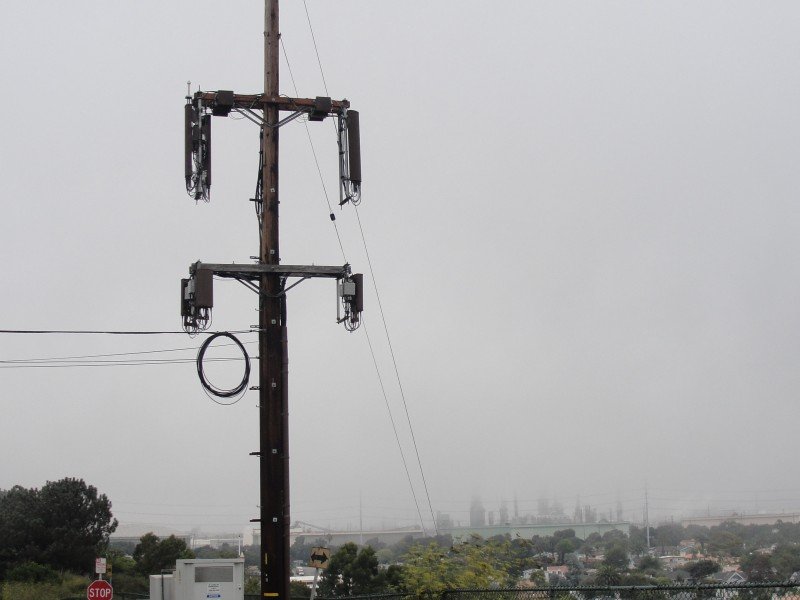
The first phase of the citywide plan will cover 35 percent of Hermosa Beach with a point of origin located near City Hall. L.A. Unplugged will place nine access points up and down Pier Avenue so that the city’s library, City Hall and the commercial corridors along Pier Avenue will have access. Those outside the phase one area will have access to the system if they have a line of sight to City Hall. This area will serve as a test area of sorts, which will gauge the system’s signal strength and the number of users who register with the system. Consultants will work through any details or bugs in this test area before installing additional signal devices in the rest of the city.
At its Jan. 13 meeting, the City Council agreed to move forward with the proposal to install the system in a series of three phases, and directed City Manager Steve Burrell to return to the council with cost estimates related to purchase agreements and installation services.
Last July, Councilman Michael Keegan, who spearheaded the effort, enlisted the expertise of WFI Inc., a firm that specializes in these projects, which gave a presentation to other City Council members.
“The vision is to provide the Internet to the city in the way that other basic services are offered, as a public amenity and convenience,” said Keegan.
The total cost for the entire project is estimated to be between $75,000 and $85,000 with citywide maintenance fees totaling about $18,000 per year.
The completed plan would make Hermosa Beach one of the first Wi-Fi cities in the United States. Cerritos was one of the first cities when its City Council voted last November to move forward with a Wi-Fi project with Aiirnet Wireless. Officials of the 8.6-square-mile city will provide services to its city offices and a population of 50,000 people.
The service in Hermosa Beach, free of charge to users, will provide online access to people in their homes or anywhere just as long as they possess the right devices such as an Internet slot card or a USB port antenna. Users will be able to access the signal just like they access an FM/AM radio signal. They will be able to pick up reception within about a half-mile radius. The entire city of Hermosa Beach is about 1.3 square miles with a population of about 21,000.
Aside from the installation, the city would pay for maintenance fees and the necessary amount of bandwidth, which is the amount of resources needed for users to log onto the Web for various Internet activities (e-mail is a low-intense use while downloading music is a high-intense use). The new service would be equivalent to a high-speed DSL connection. The city would offer the services to not only residents and businesses, but visitors as well, through third-party contracts.
 The Lazy Sway