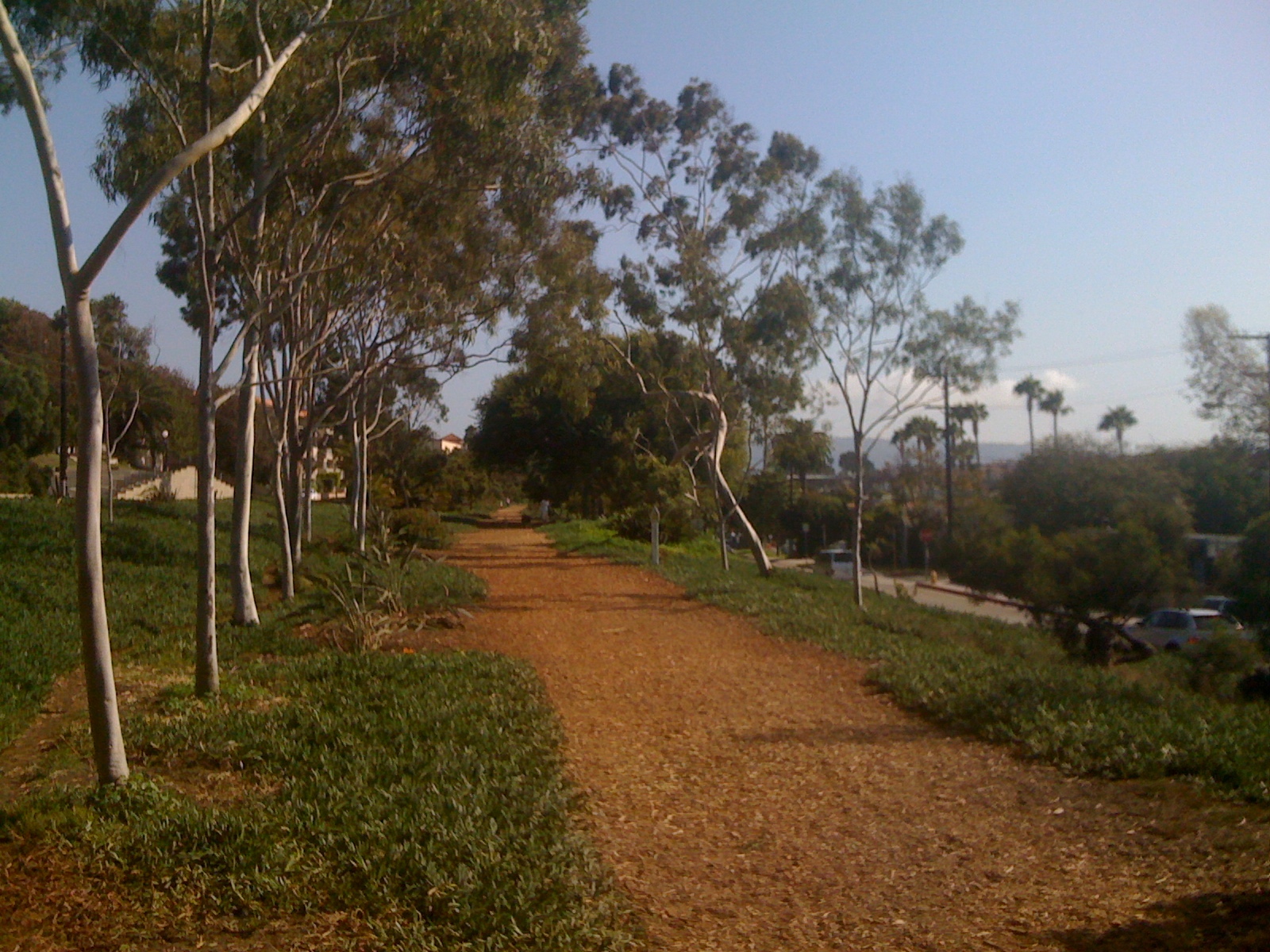
In the hopes of preventing future development of open space in Hermosa Beach, residents Gary Brutsch, Gerald Roberts and Roger Creighton recently drafted an initiative measure they are now circulating that would prohibit the city from constructing a new parking lot on the greenbelt and a bike path on the beach without a vote of the people.
“One part of this initiative says that whatever the City Council decides to do with the beach is going to be filtered through a vote of the people,” said Brutsch who sat on the council in the early 1980s. “Our big concern is that one day the people wake up and there is pavement on the beach like at El Porto, so what this does is that no matter what happens at the City Council level, it has to go to the vote of the people.
“As far as the greenbelt, I along with many City Council members fought to make sure that stayed as open space, but there are some exceptions to that open space. There has been a push to make it a bike path or make it a parking lot. I think we have to say that whatever happens has to go to the people. I think it’s a good deal because the beach is very important for us as well as the greenbelt.”
According to City Attorney Mike Jenkins’ summary, the purpose of this petition is “… to place on the ballot a proposed ordinance that would zone the city’s beach ‘Restricted Open Space’ (O-S-1), which is the same zoning designation as the greenbelt. The proposed ordinance also would prohibit any new construction, development or improvements in areas zoned O-S-1, other than replacement or repair of existing improvements.
“Whereas in the last city election an overwhelming majority of the people rejected the construction of a bike path on the beach and reaffirmed that the beach should be preserved an unimproved open space; whereas the people desire to ensure that the greenbelt area and the beach, the two largest public recreation areas in the city of Hermosa Beach, to be placed under uniform voter protection for the public’s benefit and no new parking lot on the greenbelt or bike path on the beach is built without a vote of the people of Hermosa Beach.”
Last November, an estimated 63 percent of Hermosa Beach voters opposed Measure “W” compared to 36 percent in favor of the initiative that asked voter opinion on whether the City Council should consider building a separate bike path on the beach.
“I guess what the purpose of this new initiative is to prohibit the city from expanding the existing parking area and I don’t think anybody wants to, but the purpose of the initiative is that no one ever could unless voted on by the people,” said City Manager Steve Burrell. “We don’t have plans to build parking on the greenbelt and we didn’t have any plans for a bike path. There had been some effort in the 1990s to consider building a path west of The Strand wall but it didn’t go beyond clearing the title. When we started on this we thought it was just a simple interoperation but we found out we really didn’t own it (the beach) all.”
Former Mayor John Bowler backed the idea of placing the November initiative in the hands of Hermosa Beach voters by way of an advisory measure that gauged resident approval or disapproval of such a project. If 51 percent of voters said they supported the idea, the City Council would then have initiated an analysis on the feasibility of constructing one long stretch of concrete on the beach.
Proponents claimed a separate bike path would reduce safety concerns related to Hermosa’s current path where bicyclists and skateboarders share the same long stretch of concrete with pedestrians.
Those who voiced their opposition of a separate bike path were Brutsch, a former Hermosa Beach mayor; “Stop Oil” activist Rosamond Fogg; professional volleyball player Eric Fonoimoana; resident Katharine Bergstrom; and the president of Friends of the South Bay Bike Path, Dean Francois.
“I’ve seen a couple of drafts of the (new petition) and I had a couple of suggestions for it, but I think overall, it’s a good idea to preserve the large open spaces and to ensure that changes are more in keeping with what the residents value,” said Fogg. “I would more than likely sign it, I like the concept very much.”
Those in favor of a separate bike path included City Councilman J. R. Reviczky and then-Councilwoman Kathy Dunbabin, former Councilman John Bowler, Parks and Recreation Commissioner Stephen Francis, City Treasurer John Workman and former Councilwoman Julie Oakes.
The City Council waited to address the matter until the California Appellate Court had an opportunity to interpret Hermosa Beach’s 97-year-old deed as to whether bikes were considered “wheeled conveyances,” which are prohibited on the beach. Since the city owns its own beach – unlike other neighboring cities where the county owns the beach – it must abide by its deed.
In 2000, an attorney for Creighton filed papers with the court arguing that constructing a bike path on the beach is illegal under the provisions of the city’s deed.
That same year, the city filed a motion with the courts seeking declaration that it could build a bike path if it chose to do so. In 2001, the matter came before a trial hearing and the court ruled in favor of the city. The court reviewed the deed’s ambiguous language which cites a ban on what it terms “wheeled conveyance” on The Strand.
In April of 2002, the California Appellate Court agreed with Hermosa Beach officials by ruling that the deed to the beach gives it permission to build a separate bike path on the sand. The issue first became a topic of debate in 1995 when Hermosa Beach officials sought court judgment on the deed drafted in 1907. The deed includes a clause that sought to prevent cars from driving on The Strand.
During this time, the city spent $107,000 with $66,000 of that on a title search of the beach that took about three to four years. The Sand and Surf Club, which owned the Biltmore and then was later bought by the Los Angeles Athletic Club, initially owned a large section of the beach in front of the old Biltmore Hotel and down to the pier. The city negotiated a deal with the latter and has since obtained clear title to the entire beach.
“This was a good thing that we did that because we found out we didn’t own all of the beach and so as far as I’m concerned it wasn’t wasted money,” said City Councilman J.R. Reviczky. ” The remaining $41,000 was spent in a lawsuit against Roger asking if wheeled vehicles were legal on The Strand and I clearly think it was wasted money but I didn’t waste it. Roger did.”
The city’s greenbelt is currently designated as open space and, therefore, subject to the open space provisions of the city’s zoning code related to open space laws. The open space areas, known as the O-S-1 zones, are designated as permanent spaces for public parks and recreation areas. The code also prohibits the development or construction of a building, structure or improvement unless specifically authorized by the City Council. The code does, however, permit nonbuilding improvements to maintain such areas, and also makes reference to two parking areas technically located on the greenbelt which are a lot across from Clark Stadium and a lot that no longer exists but once stood across the street from City Hall.
“Improvements to only those two existing parking areas located within the greenbelt area across from Clark Stadium and City Hall consistent with or necessary to maintain and assure designated parking spaces, without expanding the existing parking area,” states the code. “Such improvements shall be of a nature and material designed to enhance and preserve the existing natural landscape.”
According to the petition, the city’s code currently allows for additional paving for parking in this area. Brutsch, Creighton and Roberts would like to amend this section of the code to read that “Replacement or repairs of existing improvements to the O-S-1 zone within their footprint existing on the date of adoption of this ordinance shall be allowed.”
The initiative would also add the beach as an existing open space zone through a code amendment, which would be the area bounded by city limits on the north and south sides and on the east by The Strand wall.
“I’ve heard about the (new petition) but I haven’t seen it,” said Mayor Art Yoon. “However, I am of like mind in that I would not like to have any kind of construction on the beach or the greenbelt. Without having seen it, though, it’s hard to make a comment on it other than I certainly don’t support putting any kind of new construction on the beach or the greenbelt.”
“The status of the petition progressing is as expected,” said Creighton. “The current zoning still allows for that parking. It doesn’t mandate it but it allows it. The circulators of the petition want to require a vote of the people before that parking can be developed just like we want to require a public vote before any changes can happen on the beach. The only thing that would be allowed is repair and replacement of the existing improvements in both areas.”
 The Lazy Sway