The Hermosa Beach City Council Tuesday night voted to allocate $35,000 to fund the first phase of installation of a Wi-Fi system that will constitute the first steps in transforming the entire city into a completely wireless town that will provide Internet access to users anywhere in the city. The vote was 3-1.
At its Jan. 13 meeting, the City Council agreed to move forward with the proposal to install the system in a series of three phases, and directed City Manager Steve Burrell to return to the council with cost estimates related to purchase agreements and installation services.
The total cost for the consultation, installation and monitoring during the first phase is $32,140 that will take place in and around City Hall and the Hermosa Beach Community Center. This area will serve as a test area of sorts, which will gauge the system’s signal strength and the number of users who register with the system. Consultants will work through any details or bugs in this test area before installing additional signal devices in the rest of the city.
“Coverage area for this first phase will include Pier Avenue west toward the beach and serve the residential areas to the north and south and east to PCH,” said Burrell. “The signal coverage may vary somewhat depending on line of sight and the type of equipment that the receivers have on their individual computers. This is a public access system, if you will. The best analogy I have come up with for this project is that the city is basically providing the street and in order to get your car off the street someone must build a driveway. The city is providing the service but someone may need to use an antenna on their own desktop to receive better coverage in their homes.”
The total cost for the entire project is estimated to cost between $75,000 and $85,000 with citywide maintenance fees totaling about $18,000 per year.
Burrell added that there is an opportunity to recoup some of the costs through the registration page that every user will need to log onto if they want to take advantage of the system. This registration page will also serve as a tracking system in the event the city decides to charge the users for the service in the future.
“The project has the ability to generate revenue through the sale of ads and sponsors,” added Burrell. “This would be particularly important in the event of a complete citywide deployment, and could go a long way to cover the ongoing operational and maintenance costs.”
Councilman Art Yoon, who works for Cox Communications, excused himself from the discussion and vote because he felt it was a conflict of interest since his employer provides high-speed Internet service. Councilman Peter Tucker opposed the project, claiming the city was in the midst of attempting to absorb future budget shortfalls and felt the city just didn’t have the money to spend on such a project at this time.
“I just feel that spending this money on a project when we don’t know who’s going to use it is a bad decision,” said Tucker. “We have a budget meeting coming up and we are asking our city employees to cut back. Then we’re going to turn around and spend this money. I feel that we first need to get our hands around the budget and I need to see a clear financial picture before I can vote for this.”
In July, Mayor Michael Keegan enlisted the expertise of WFI Inc., a firm that specializes in these projects, which gave a presentation to other City Council members. Since then, the city has been in talks with another firm that can provide better services and experience in the project’s installation process for far less money.
“I think this project is forward-thinking,” said Keegan. “Since I’ve been on the council we’ve always had some kind of crisis when it comes to the budget, and we’ve still managed to get our roads paved and our trash picked up. I think this project will put Hermosa Beach in a positive light. I think this is a tax cut in a sense because we are giving a free service to residents that they would normally pay for.”
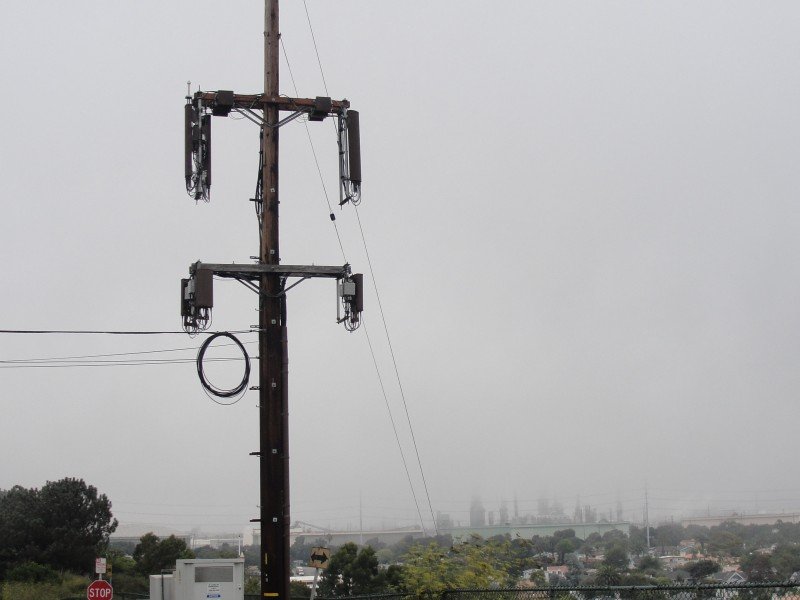
Phase one will include the installation of nine wireless nodes that will make their way onto building rooftops or street light poles. Burrell said that the operating costs during the first phase would increase the city’s telephone bills by roughly $1,000 per month.
“Some of this may be offset by combining the two T1 lines that the city now has into one T3 line (cost between $3,500 and $4,000),” added Burrell. “The other costs after start up would include monitoring which will run about $500 per month.”
The completed plan would make Hermosa Beach famous as one of the first Wi-Fi cities in the United States. The city of Cerritos recently beat Hermosa Beach to the punch when its City Council voted in November to move forward with a Wi-Fi project with Aiirnet Wireless. The 8.6-square-mile city is now currently putting the final touches on its wiring for the project that will provide services to its city offices and a population of 50,000 people.
According to Keegan, many colleges and universities across the country such as Georgia Tech and UCLA have turned entire campuses into completely wireless environments. Sections of cities such as Lancaster, Long Beach and Culver City have also installed Wi-Fi systems while the city of Cleveland recently devised a plan to make the entire city wireless.
The service in Hermosa Beach, free of charge to users, would provide online access to people in their homes or anywhere just as long as they possess the right devices such as an Internet slot card or a USB port antenna. Users will be able to access the signal just like they access an FM/AM radio signal. They will be able to pick up reception within about a half-mile radius. The entire city of Hermosa Beach is about 1.3 square miles.
Aside from the installation, the city would pay for maintenance fees and the necessary amount of bandwidth, which is the amount of resources needed for users to log onto the Web for various Internet activities (e-mail is a low-intense use while downloading music is a high-intense use). The new service would be equivalent to a high-speed DSL connection. The city would offer the services to not only residents and businesses, but visitors as well, through third-party contracts.
“I see this as a demonstration project and I don’t have a problem allocating this money because we have it this year,” said Councilman J.R. Reviczky. “It will tell us whether residents are going to use it and what this system is going to cost. I think the potential for this here is huge.”
 The Lazy Sway