The Hermosa Beach Planning Commission Tuesday night unanimously voted to review conditional use permits of two downtown establishments based on the request by Police Chief Mike Lavin.
Both CUP reviews of Aloha Sharkeez and Sangria are expected to occur by way of a public hearing at the commission’s next meeting scheduled next month.
The commission reviewed an incident report drafted by Lavin that details the history of officer calls responding to incidents taking place inside or outside downtown restaurants and bars, and several along Pacific Coast Highway.
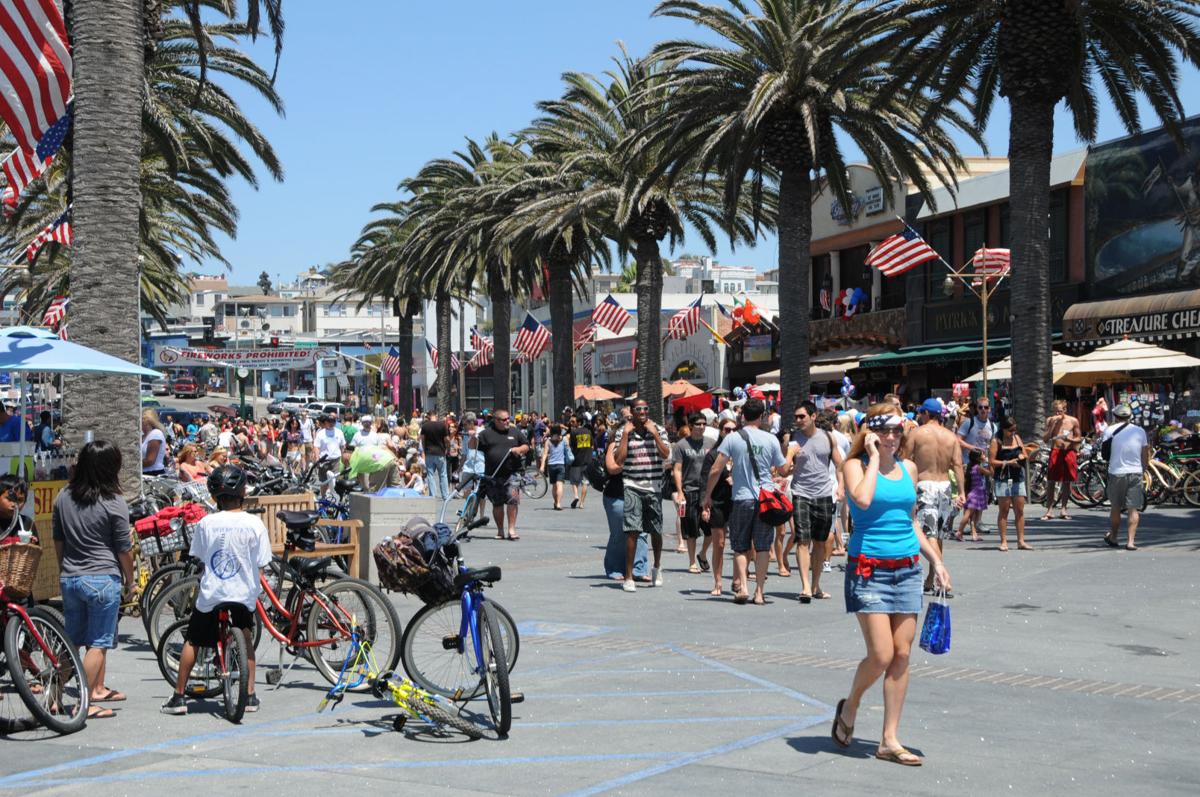
“For the past several years, the city of Hermosa Beach has enjoyed a very popular downtown area,” stated Lavin in his report. “In particular, the Hermosa nightlife has become very popular and several thousand patrons frequent the downtown nightclubs, especially on the weekend nights. The Police Department has had to increase the amount of enforcement activity on the Hermosa plaza to keep a lid on the crowds and the associated public disturbances, assaults and public intoxication that have become very commonplace each evening between the hours of 10 p.m. and 2:30 a.m.”
The Police Department staffs the plaza with foot patrol units on every night of the week with the exception of Monday and designates additional foot patrols on weekend nights.
“All of this activity is paid through overtime and is costing the city several hundreds of thousands of dollars each year,” added Lavin. “This activity on the plaza has also been the source of numerous personnel complaints against officers, claims against the city, lawsuits and injuries to officers.”
According to Lavin’s report, officers received 83 and 71 disturbance calls from Sangria and Aloha Sharkeez, respectively. The report tracks the history of calls from Dec. 1, 2002, to Jan. 10, 2004.
“It should be made clear that these were the number of calls made to that address, meaning that some of these calls were made on the plaza but because it was in front of the address it was the address that was noted,” said Commissioner Peter Hoffman.
Because the two establishments ranked as the first and second in the highest number of calls among the 15 other restaurants and bars mostly located in downtown and some along PCH, Lavin asked the commission to review both CUPs. The commission will determine whether the CUPs were properly and adequately implemented as a way of controlling some of the problems that have come in the form of such disturbance calls.
“Once it’s back before us, we have complete discretion over their conditional use permits,” added Hoffman. “So, we can alter their hours of operation and other factors such as the use of doormen and the level of noise attenuation. There are a variety of things that we have discretion over, but all of their elements of the conditional use permits are up when they come back before us. All the bars and restaurants operating under conditional use permits are reviewed annually and after preparing the report, Chief Lavin’s conclusion was to request us to look at the CUPs of these two establishments.”
Among the restaurants with the lowest number of calls, Patrick Malloy’s was ranked the lowest with one call followed by the Poop Deck with two calls, the Hermosa Yacht Club and Caf/ Boogaloo with three calls, and the Mermaid restaurant and Barnacles tied for fourth place with five calls each. The report focuses on calls directly dealing with disturbances, assaults and public intoxication.
“The most common disposition of calls are advised and assisted, booking or arrest or gone on arrival unable to locate,” said Community Development Director Sol Blumenfeld. “It should be noted that when a service call is reported from an address, it did not necessarily occur inside the business, but may have occurred in front of or near the address.”
Of the remaining establishments, Shark’s Cove received six calls, followed by Pointe 705 with 10, Hennessey’s with 11, TJ Charly’z and the North End Bar with 13, Hermosa Saloon with 16, the Pitcher House with 17, the Underground with 33 and the Lighthouse with 45.
The Planning Commission has always reviewed CUPs on an annual basis, but a most recent change to the process allows for the appointed group of volunteers to review the CUPs of every establishment all at once in the month of January. Instead of reviewing each CUP on an individual basis based on when the permits have been issued, they are all now reviewed together as a way of saving time among staff employees who assist the commission in the process.
 The Lazy Sway