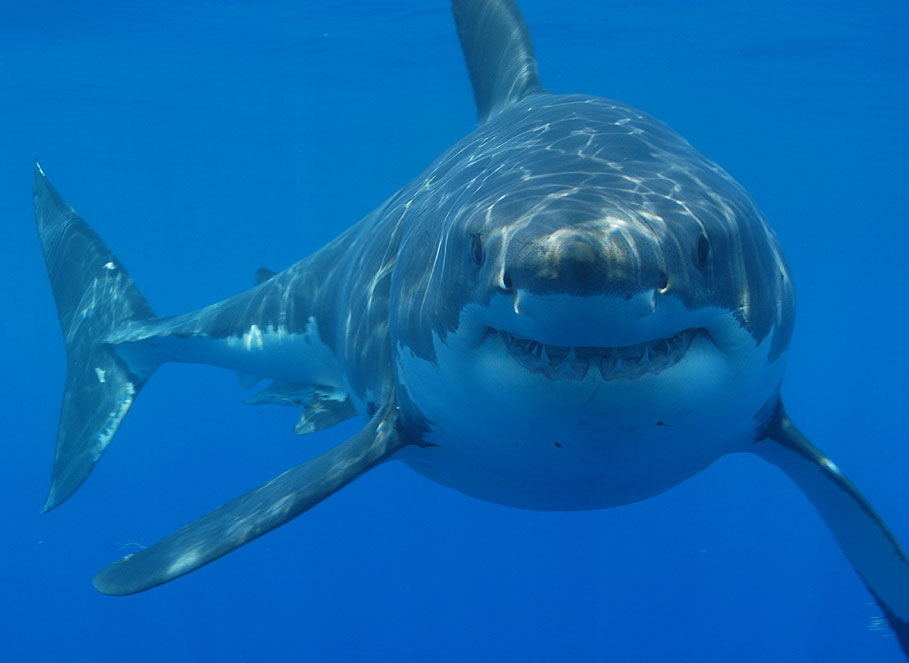
Researchers with the Monterey Bay Aquarium are actively seeking a data probe that prematurely separated from a young great white shark last week and is thought to have washed ashore somewhere between Manhattan Beach and Redondo Beach.
According a Bay Aquarium spokesman, Ken Peterson, scientists involved with a project that monitors the whereabouts of young great white sharks are offering a $500 reward to anyone who successfully retrieves the probe consisting of a wire and tag that resembles a 7-inch microphone. Scientists hope to collect the remaining information from the probe shortly before it fell loose from the shark.
“The electronic tag tracks the shark’s life for 60 days and was placed on the shark in late July. It would begin telling scientists about her behavior after she was released on Aug. 2,” said Peterson. “It had begun to transmit data back to the aquarium via satellite, but the transmissions stopped when the tag washed ashore. The remaining data can’t be recovered until the tag itself is found and returned to the aquarium.”
Researchers placed the tag on a 5-foot female shark that was caught by halibut fisherman July 29 off the Ventura County coast. The cost for the probe and the attachment is valued at $3,500. An aquarium in Malibu held the shark for nearly a week where it was the first documented shark to feed while in captivity.
“Visitor studies have established that the experience of seeing live animals in an aquarium can have a significant and lasting impact on people,” said Cynthia Vernon, the aquarium’s vice president of conservation programs. “If we succeed in exhibiting a white shark, we can raise awareness about the threats they face. It’s been true with other sharks we’ve exhibited over the years, and I believe it will be true with white sharks, too.”
The tags ultimately pop free of the shark and direct their stored data to scientists via satellite. The Monterey Bay Aquarium is in the midst of a field research project that tracks the behaviors in the hope of someday displaying a white shark in its million-gallon Outer Bay exhibit.
“Given the way white sharks have been demonized in popular culture, a change in public attitude is critical if we want to assure their survival,” Vernon added. “We have strong shark conservation messages to deliver. The appeal of live animals makes our visitors more receptive to hearing and acting on the conservation messages.”
The second season of a multiyear project began in July when researchers set out to catch and tag a shark. The project is expected to continue through 2004 or 2005, and answers questions about what scientists call the “young of the year” white sharks. These sharks are newborns that oftentimes end up in sport and commercial fishing gear during the summer months.
“By learning more about what young sharks do in the ocean, biologists will be better able to assess whether a white shark would do well outside the wild,” added Peterson. “Data from the tag will also contribute to better management of white sharks in the wild. The tag, one of two placed on white sharks by aquarium researchers last summer, records depth and water temperature as well as the shark’s migrations up and down the coast.”
The Monterey Bay Aquarium and researchers from the Southern California Marine Institute and the Shark Lab at California State University, Long Beach, are hoping to tag as many as half a dozen sharks this year.
 The Lazy Sway