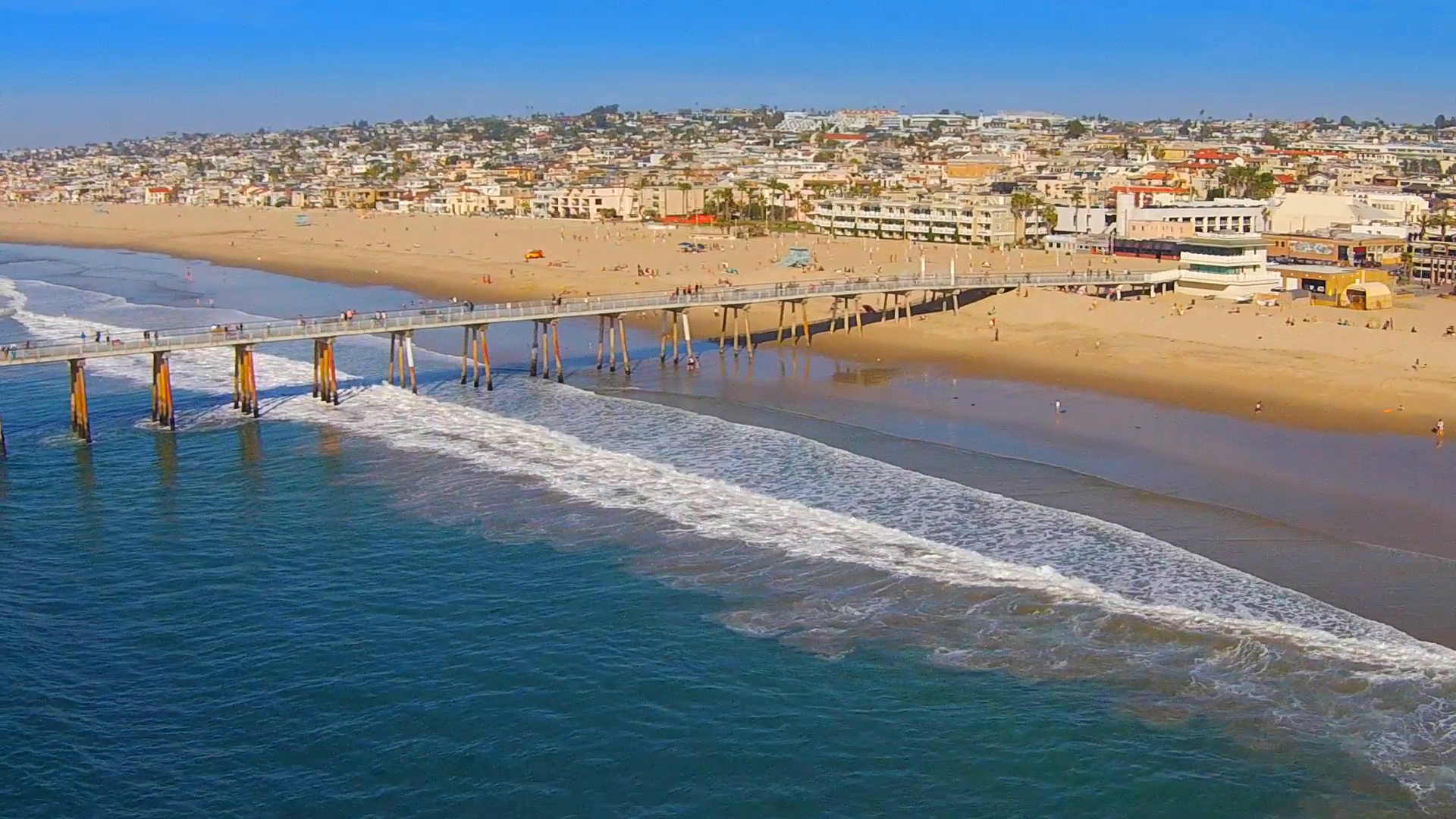
Surfers looking for good waves, scientists studying the effects of erosion or tourists hoping to find the perfect beach can check a few popular coastlines without ever having to leave their homes thanks to a new Internet network.
The Los Angeles County Fire Department, Lifeguard Division, in conjunction with the Department of Beaches and Harbors and the USC Sea Grant Program, recently launched a new Web site, which the public can access to check out the latest conditions in areas like Hermosa Beach, Zuma Beach, Marina del Rey and Manhattan Beach.
“This program is going to provide beach-by-beach safety information,” said Ocean Lifeguard Michael Bateman, who works from the Lifeguard Division Headquarters at Venice Beach and acts as the program’s project manager. “If there is a beach closure or a beach water quality issue or a beach safety issue, you’ll be able to see it on a beach-by-beach basis, along with the vitals of the beach conditions, the temperature, water temperature, wind, surf, sun and tide.
“It also has a fantastic tool called the beach locator that selects beach amenities that you’re interested in and will return a list of beaches in prioritized order by how many matches based on the amenities. So it allows you to pick a beach that has firepits, bicycle paths, fishing, etc., and it also displays it in a multilingual format.”
People all over the world can now access these beach images updated every 30 minutes via the Internet with the latest technology, which puts four Web cameras on the beach that were recently installed on various lifeguard towers. Once the project, called the Coastal Monitoring Network, is complete, the system will comprise 27 Web cameras the size of a softball, three sets of meteorological instruments and five water thermometers covering 72 miles of Los Angeles County’s coastline.
All three agencies that founded the project received funding by way of a federal grant aimed at improving public safety, public education and environmental studies. Los Angeles County was one of 47 nonprofit groups selected from 600 applications, which included state and local governments, in a 2001 national competition.
“The public will be able to search for a beach based on criteria such as showers, parking or volleyball courts, then see regularly updated information about that beach, such as current conditions, surf, events and beach advisories,” said Chief Lifeguard Mike Frazer.
The system will enable lifeguards to track rescue activity and schools will be able to use the system as an educational resource while the scientific community will be able to collect environmental data.
“Beach images will be useful as we develop both classroom and Internet-based curricula for students and families living in L.A. County some distance from the coast,” said Phyllis Grifman, associate director of the USC Sea Grant Program.
The lifeguard services hired the Hermosa Beach-based independent research firm Albert Hydeman Associates in 2002 to examine and study the program’s effectiveness.
A baseline study was conducted to determine the initial attitudes and expectations of 80 lifeguards and 70 beach patrons on this program.
According to the research results, 93 percent of beachgoers have an overall favorable opinion of the program with virtually no objections or unfavorable comments on the public safety aspect of the program. More than half of those people interviewed said they would use the program’s public Web site.
More than 75 percent of those interviewed said they would use the public Web site to plan a trip to the beach.
From a public safety standpoint, lifeguards will be able to respond to hidden pockets of the beach being used by the public.
“The program was conceived with the public safety application of identifying activity in a pocket of the beach that is unguarded,” said Bateman. “We have about 700 lifeguards in Los Angeles County and 150 of them are full time, the rest are more or less like substitute teachers. They are hired on an as-needed basis. The idea is to see if we can identity a situation where, for example, a bus load of children arrive at an unguarded pocket beach, so that a lifeguard can be dispatched as soon as possible.”
Both the county and environmental scientists will have access to the system so that they can track coastal erosion and storm drain emissions to determine the productivity of beach management measures. The program’s weather instruments will provide the first automated meteorological reports on the beach along the coast in Los Angeles.
For more information, visit the Web site at www.watchthewater.org.
 The Lazy Sway