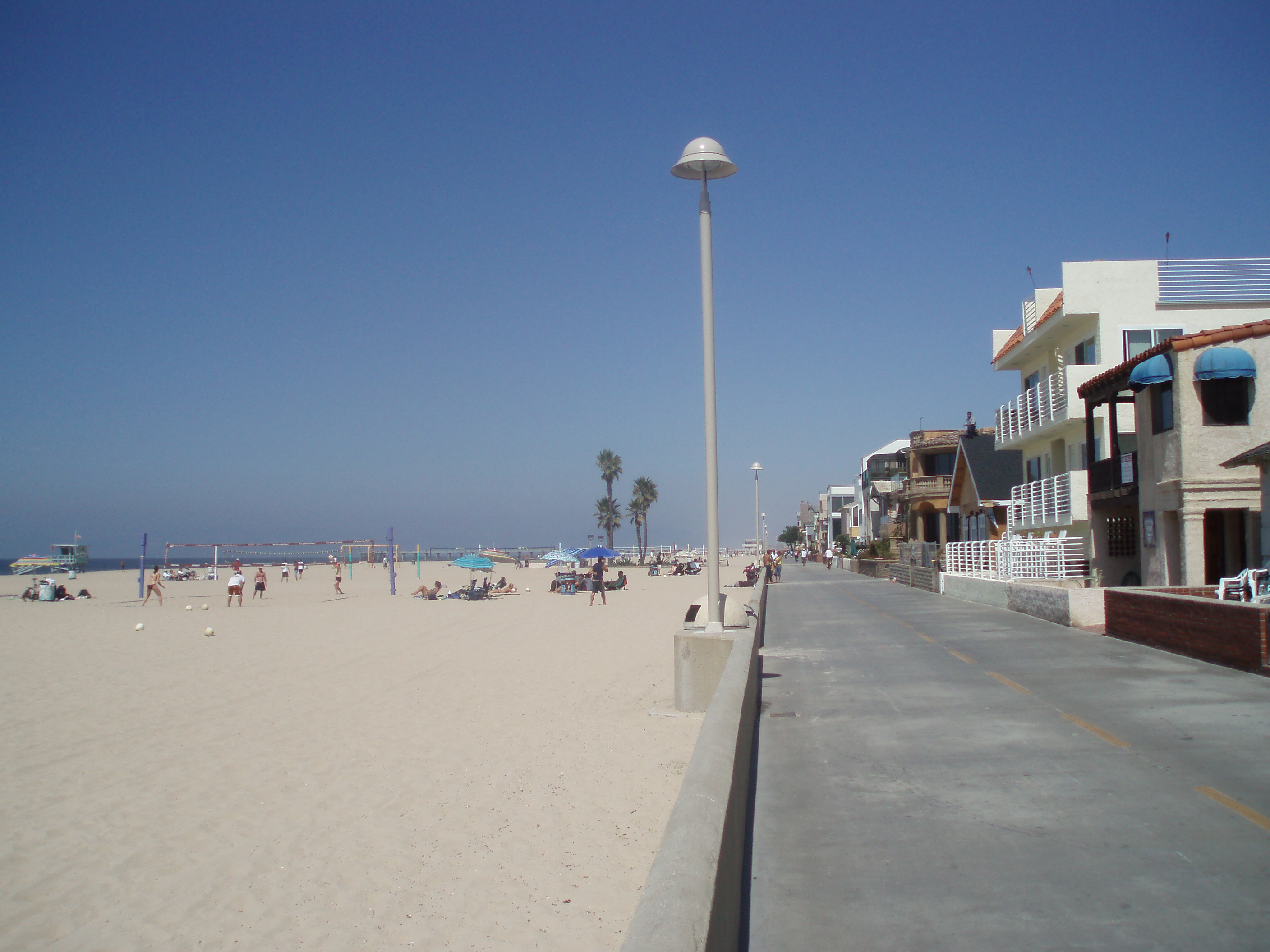
Backed by former City Councilman John Bowler, the issue of whether to construct a separate bike path just west of The Strand in Hermosa Beach will most likely come before voters in November.
Bowler formally approached the City Council with his suggestion of placing the matter on the November ballot in the form of an advisory measure at its last meeting. The council agreed to review the issue for final judgment at its June 24 meeting.
“The previous council, of which I was proud to be a part, discussed the idea of constructing a separate bike path immediately west of The Strand wall to separate bicyclists, rollerbladers and skateboarders from pedestrians,” said Bowler. “It was decided that a decision of that magnitude should be left to the voters.”
The idea of constructing a separate bike path surfaced in response to safety concerns on The Strand in Hermosa where bicyclists and skateboarders share the same long stretch of concrete with pedestrians and baby carriages.
In April of 2002, the California Appellate Court agreed with the city of Hermosa Beach that its 80-year-old deed to the beach gives it permission to build a separate bike path on the sand.
Despite the City Council’s satisfaction on the court ruling at the time — a decision that supported an early Superior Court judgment — it had yet to discuss whether residents would embrace a proposed bike path.
Several City Council members have always believed the construction of a separate path is somewhat controversial among residents and thought if it ever did come to the forefront again, it should go before the voters by way of a ballot initiative.
“This is a big decision and I have to see how congestion on The Strand has become a perpetual problem in Hermosa Beach,” said Councilman J.R. Reviczky. “I personally would like to relieve this congestion but no matter what we do I want the community to be with us the whole way.”
The issue first became a topic of debate in 1995 when Hermosa Beach officials sought court judgment on the beach’s deed drafted in 1907.
The city of Hermosa Beach is unique compared to its neighboring beach cities in that it owns its beach and must abide by the deed. The deed includes a clause that sought to prevent cars from driving on The Strand. The decision relieved the city of any restrictions in building a bike path on the beach.
“The issue before you is not one of the appropriateness of such a path nor of specifying the details of such a project but merely one of allowing the citizens of Hermosa to voice their opinion on the matter,” added Bowler.
In 1995, the Hermosa Beach City Council agreed to seek a ruling on the beach’s deed prior to any discussion on earmarking public funds for a proposed project.
In 2000, the city filed a motion with the courts seeking declaration that it could build a bike path if it chose to do so. In 2001, the matter came before a trial hearing and the court ruled in favor of the city. The court reviewed the deed’s ambiguous language which cites a ban on what it terms “wheeled conveyance” on The Strand.
The city asserts the deed was written to keep cars and horse carriages off the beach and The Strand. The court agreed with the city, and ultimately granted victory to it after translating the deed’s wording and concluding that bikes are excluded from such a prohibited use.
“Pedestrian safety is a No. 1 concern for me, but I also want to promote environmental interests with beach replenishment projects,” said City Councilman Art Yoon. “I’m nervous any time we start taking away beach space.”
 The Lazy Sway