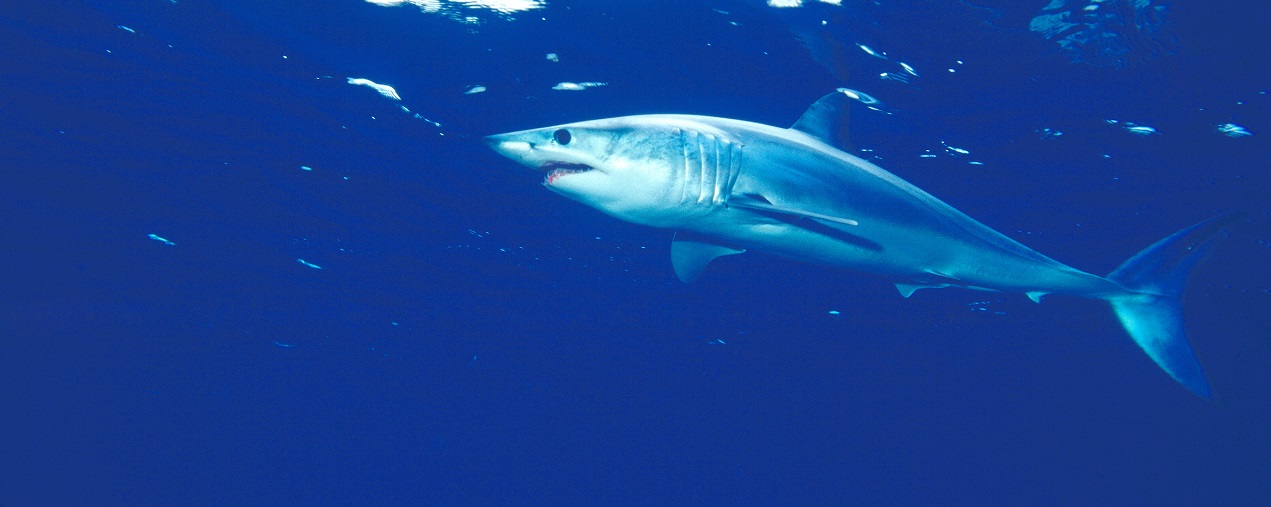
According to Los Angeles County Lifeguards based in Hermosa Beach, several witnesses spotted a mako shark swimming along the city’s shore last week.
Several witnesses standing at the end of the city’s pier saw a shark between 5 and 7 feet long. Makos are considered a member of the predator sharks which also include great white and blue sharks.
“I think the sighting of this mako is coincidental,” said Hermosa’s Ocean Life-guard Specialist Joel Gitelson. “Working as a lifeguard for the past 22 years and diving in the water every week, I have never seen a shark in the water. It’s so rare. You just don’t see these sharks swimming off the shore in the Santa Monica Bay. They may be here and we just don’t see them, but I really don’t think so.”
The chances of actually being attacked by a shark are very tiny. Gitelson said the notion of sharks swimming closer into shore when the water warms up is a myth.
“They don’t usually come into the South Bay. Their food source is at about midchannel which is from Palos Verdes to Catalina Island and beyond,” said Gitelson. “Sharks are unpredictable and in the words of Jacques Cousteau, ‘The only way to protect yourself from being bitten by a shark is to stay out of the water.'”
According to George H. Burgess, senior biologist in ichthyology (the study of fishes) at the Florida Museum of Natural History, University of Florida, and the director of the International Shark Attack File, an online data source investigating shark attacks, people have a better chance of dying from a bee sting, dog or snake bite or being hit by lighting than from a shark attack.
“As apex predators, sharks limit the populations of the animals they eat,” said Burgess. “This maintains the balance of nature. Sharks occasionally do attack humans, but not all attacks are feeding events. Sharks sometimes grab humans by mistake. Other times, an attack may protect a shark’s space, much as a dog barks at and bites intruders.”
According to the University of Florida’s findings on worldwide shark attacks released in February, the number of attacks over the past two years is on a decline.
The number of unprovoked attacks reached 60 in 2002 compared to 72 reported in 2001 and 85 recorded in 2000.
The number of fatalities declined to three in 2002, from five in 2001 and 13 in 2000.
In recent years, the majority of attacks (82 percent) took place in North American waters. Of the 47 attacks, 29 were reported in Florida, Hawaii followed with six and California with four.
Although some believe the shark may have swam closer to shore because of the abundant food source with the many sea lions in El Segundo, Gitelson believes the sighting was by chance.
“We always have sea lions close to shore and in fact, the white buoys off El Segundo are covered with them,” he said. “This is a lot of food for predator sharks but they chose not to seek this source of food. Predator sharks are sometimes curious and they want to see who you are. In these waters we mostly see leopard, angel and nurse sharks which are harmless sharks and considered bottom-feeders.”
 The Lazy Sway