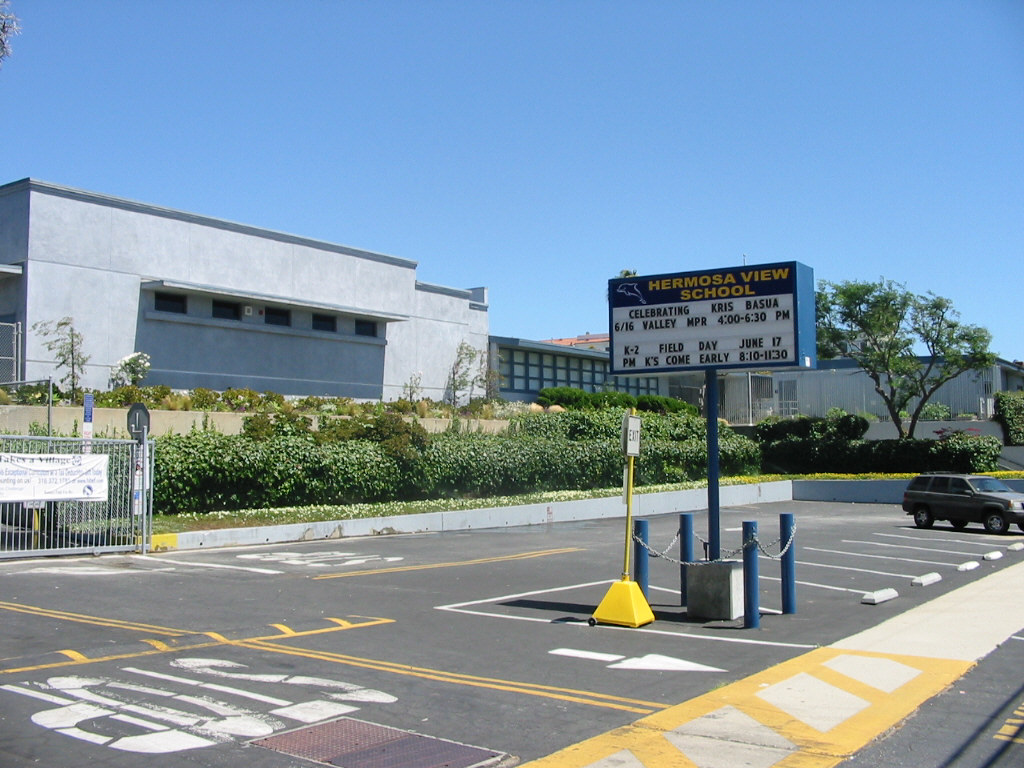
According to the California Department of Education’s 2002 base Academic Performance Index released Feb. 20, Hermosa Valley and View schools were ranked in the top 10 percent of public schools in California. Both schools scored well above the target score of 800 based on a numeric index ranging from 200 to 1,000 points.
This year’s API base results include new California standard tests and so the calculation of the 2002 base API is different from the 2001-02 growth API released in October. According to the state Department of Education, any comparison of the two scores would be inappropriate. Schools are expected to meet their annual API growth targets during the upcoming 2003 STAR testing.
“This year’s changes are the most far reaching since the inception in 1999 of the API,” said Jack O’Connell, state superintendent of public instruction. “The 2002 base API is the culmination of a long-term effort to use California’s comprehensive and rigorous standards as the benchmark for learning.”
A total of 674 out of 691 Hermosa Valley students and 117 out of 120 Hermosa View students were included in this year’s 2002 API base results.
This constitutes a 100-percent participation rate.
Valley’s 2002 API base score is 852 points and View’s base score is 893 points.
Valley School was rated above average in statewide rankings and will receive funding through the Certified Staff Performance Incentive Act and the Governor’s Performance Award Program.
Some ethnic minorities of the 674 Valley students included on the 2002 API base score are five African Americans, six American Indians, 47 Asian Americans, 64 Hispanics or Latinos and 541 whites. Of these 674 kids, 36 are considered to be socioeconomically disadvantaged.
Of the 107 Hermosa View students, four are African American, nine are Asian American, eight are Hispanic or Latino and 91 are white. Four students are defined as socioeconomically disadvantaged.
The growth in Hermosa Valley’s API score qualifies it for incentive funding. Schools usually meeting their growth targets and increasing their results with a minimum of five growth points will be eligible for API-related awards programs.
The new baseline puts most of the weight on tests specifically aimed at California’s high standards as 80 percent of the API will rest on the California Standards Tests for elementary and middle schools. This year’s API includes results from the CST English and math scores.
The remaining 20 percent rely on the national standardized test results of the Stanford 9, an exam administered in conjunction with the Standardized Testing and Reporting program to every student in California in the spring.
“The new API base scores will continue to be a work in progress but will now be more predictable,” said O’Connell. “The API baseline now contains almost all major indicators. Over the next few years, the API will continue to add indicators.”
In 2002, 4.7 million public schools across the state in second through 11th grades, participated in the STAR testing program.
The API, established in 1999, is a centralized report that is included in a statewide accountability system for all California public schools. State legislation requires the California Department of Education to calculate API test scores of every public school as a way to monitor and improve academic growth and performance among all schools in the state.
During its first year, the Department of Education determined a base score on a scale of 200 to 1,000, defined 5-percent annual growth rates for schools and established an interim statewide performance target of 800.
The growth scores later become the API base score, summarizing individual pupil performance. Schools receive statewide rankings among other state schools that share similar demographic traits like ethnicity and socioeconomic status.
Each school that has participated in the program since its inception has created its own growth target. The 2002 target is computed by taking 5 percent of the distance between the school’s 2001 base score and the interim statewide target of 800 out of a possible 1,000 points.
Schools with scores lower than 250 are considered low-performing while scores closer to 530 are considered average. Scores that reach 800 or higher are defined as high-performing schools.
Schools with scores of less than 800 points are given goals to meet for the following year. Schools that meet their goals are eligible for funding through an incentive program.
Schools scoring higher than 800 need only to keep their scores above 800 to meet their goals.
 The Lazy Sway