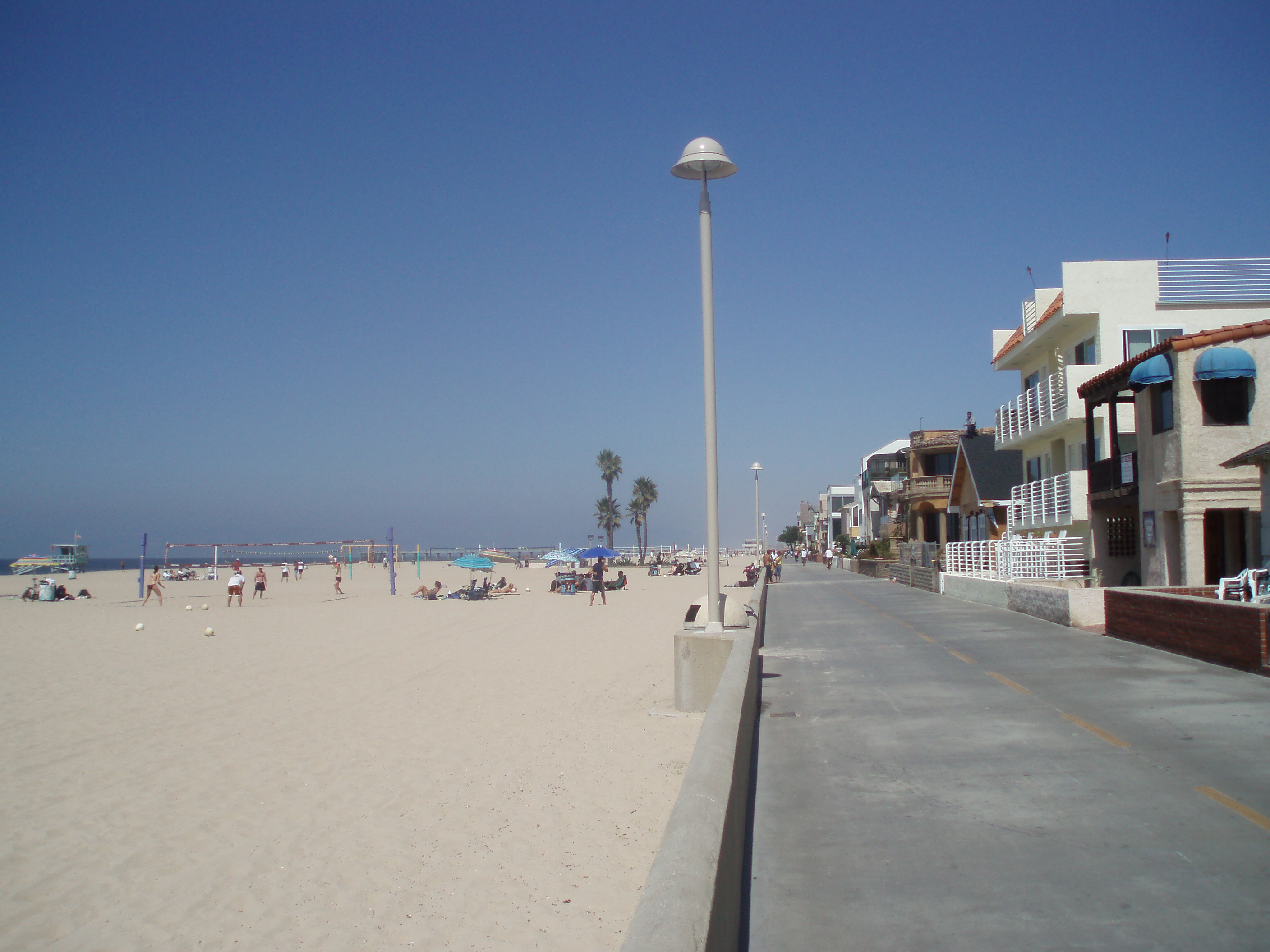
by Whitney Youngs
The California Appellate Court last month agreed with the city of Hermosa Beach that its 80-year-old deed to the beach gives it permission to build a separate bike path on the sand.
Although the Hermosa Beach City Council has expressed satisfaction with the court decision — which supported an earlier Superior Court ruling — it has yet to discuss whether residents would embrace the proposed bike path.
According to City Attorney Mike Jenkins, the city could face one more step in the legal process if Roger Creighton, the former City Councilman who appealed the initial court ruling, files a petition at the state Supreme Court level requesting it to review the case.
“It won’t be officially ended until Roger chooses to either seek this review, which the court will either deny or agree to, or not do anything at all,” said Jenkins. “If the court does agree to review the case, then it will either uphold or reverse the appellate court’s ruling. In my view, the matter does not serve to alter or add to the established body of law and so this case doesn’t meet the criteria for a potential Supreme Court review.”
City Councilman J.R. Reviczky believes the idea of constructing a bike path is somewhat controversial among Hermosa Beach residents. He feels that if the City Council does discuss the idea of building a bike path, the matter should be placed before the voters through a ballot initiative.
“First, we wanted to know if building a bike path was an option because we heard a lot of discussion on both sides and we wanted to pose the question to the court,” said Reviczky. “This is a big decision and I have seen how congestion on The Strand has become a perpetual problem in Hermosa Beach. I personally would like to relieve this congestion. But no matter what we do, I want the community to be with us the whole way.”
This issue first became a topic of debate in 1995 when Hermosa Beach city officials sought a court judgment on the beach’s deed drafted in 1907. The city of Hermosa Beach is unique among its other counterpart beach cities in that it owns its beach and must abide by its deed. The deed includes a clause that sought to prevent cars from driving on The Strand.
The decision in favor of the city relieves it of any restrictions in building a bike path on the beach.
The idea of constructing a bike path surfaced in response to safety concerns on The Strand, where bicyclists and skaters share space with pedestrians and baby carriages.
“I’m an avid runner and I use The Strand every day, and I see how really dangerous it is on a daily basis,” said resident Alice Costa. “People fly by me on their bikes and it’s really scary sometimes because you have people weaving in and out of traffic. I think the city should build a bike path in some areas on the beach or on Hermosa Avenue.”
In 1995, the Hermosa Beach City Council agreed to seek judgment on the beach’s deed prior to any discussion on earmarking public funds for such a proposed project. In 2000, the city filed a motion with the courts seeking a declaration that it could build a bike path if it chose to do so.
Later that year, Creighton filed a cross-complaint against the city, claiming the deed’s language and restrictions were undisputed facts of record.
In 2001, the matter came before a trial hearing and the court ruled in favor of the city. The court reviewed the deed’s ambiguous language which cites a ban on what it terms, “wheeled conveyance” on The Strand. According to the city, the deed was written to keep cars and horse carriages off the beach and The Strand.
The court ultimately granted victory to the city after translating the deed’s wording and concluding that bikes are excluded from such a prohibited use, which would allow the city to build a bike path.
Creighton then appealed the ruling, contending the court violated the deed’s restrictions by failing to define bikes as a “wheeled conveyance,” which would forbid such use on The Strand.
Last month, the appellate court upheld the initial ruling, stating the decision properly resolved any ambiguity in the deed related to the use and meaning of bikes, sanctioning for the possible construction of a bike path.
City Councilman Art Yoon said he would like to entertain the notion of building a bike path but only as a way of improving pedestrian safety. However, he has reservations about cutting into the city-owned beach.
“My No. 1 concern is pedestrian safety,” said Yoon. “But I also want to promote environmental interests with beach replenishment projects and I’m nervous any time we start taking away beach space. But I have also seen those people who don’t follow city codes when riding on The Strand and so we have to either do a better job of enforcing these codes or build some kind of ancillary bike path in the area around the pier.”
 The Lazy Sway